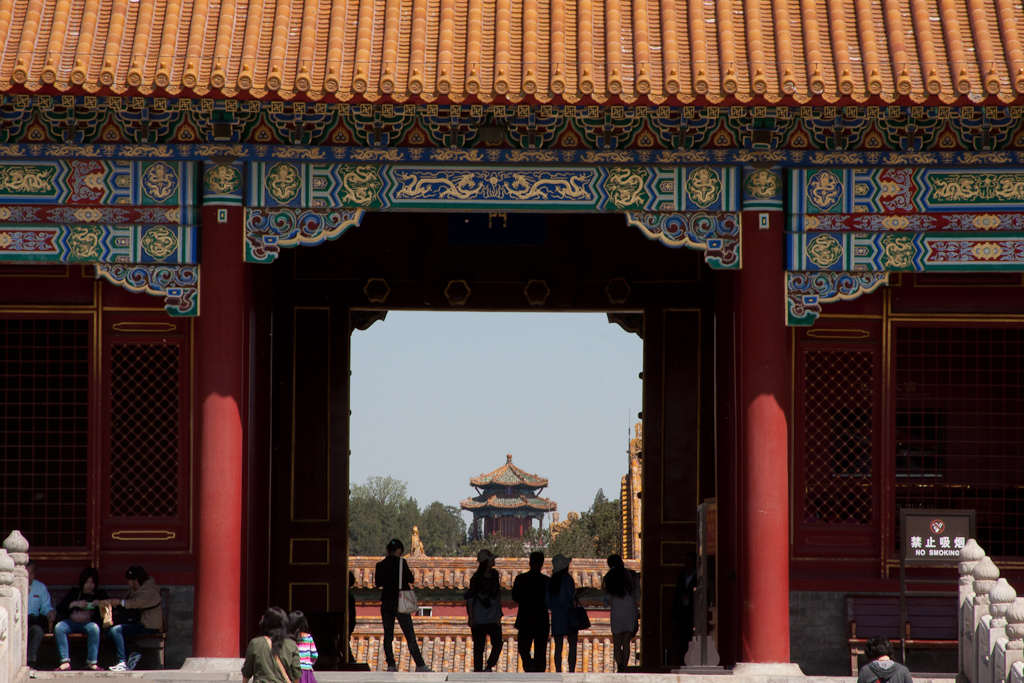
"Not all those who wander are lost" -- J.R.R. Tolkien

Friday, June 15, 2012

china 2012: closing ceremonies

We closed out our travels in China with short visits to Xi’an, home of the much-hyped-about Terracotta Army, and Shanghai, the largest (by population) and most modern city in the PRC.  This part of the journey involved some seriously long overnight train rides, starting in Beijing from where we left for Xi’an. 

The train station in Beijing was an absolute madhouse.  First of all, it was huge.  I followed Aman closely through the giant halls, filled with people darting here and there, as we passed stores left and right that all sold the same items, more or less.  Secondly, the station was packed.  When Aman and I found the gate for our platform, which shared a cavernous waiting room with three other gates, there were people everywhere.  Standing in groups, sitting in any and every chair available, sleeping on their luggage, squatting on the ground, etc.  The floor was covered in a gritty layer of dirt and strewn with sunflower seed shells and the occasional glob of spit.  With that many people jammed in there, it didn’t seem like an easy place to keep clean, I reasoned in its defense.  Aman and I cut through to our gate, passing by the ubiquitous group of domestic tourists in matching hats.  Our train was boarding so thankfully we did not have to spend any time in the waiting area.

On the platform below, we quickly found our train car and our deluxe private compartment.  Yes, it was a bit of our splurge, but it was also our first time aboard an overnight train in China and we were curious what first class luxury would be like.  Besides, how often will we have the chance to do this again, we asked each other.  Complete with a cozy armchair, a private toilet, bunk beds, and a locking door in our cabin, we were riding in style – at least, relatively speaking.


Soon after we left the station, Aman went to the cafĂ© car to procure some beers and wine for the long night ahead.  From one of our bags, I fished out our beaten up deck of playing cards and an iPad, which I quickly set to a chill playlist that some good friends made for us before we left New York (thanks Jason and Annie!).  We played cards, listened to music and talked about Xi’an and the adventures that lie ahead.  At some point, a young Chinese kid who we had seen working the train beverage cart throughout the night, came into our cabin (the door was open).  For no particular reason, perhaps out of plain curiosity, he sat down and started watching us play cards.  He picked up our iPad, turned it over and inspected it from every angle.  He put it back down and pointed to the bottle of red wine on our table, picked up an empty glass, and said something in Mandarin to Aman.  Wine glass, Aman said.  The kid put the glass back down on the table and continued to watch us play cards.  Aman asked him a few simple questions in English, but predictably, those went unanswered.  The kid picked up the stack of unused cards that we were using in a game of gin rummy, turned them over and started sorting through them.  Yo man, what are you doing… we’re playing a game of cards here, Aman said. The friendly colleague of our young companion appeared in the door moments later and said something to him in Mandarin.  He got up and left without a word.  And, that was the last we saw of our curious little friend who was in charge of the beverage cart.

Arriving the next morning in Xi’an, the train station was crazy and chaotic, but less so than Beijing, by far.  Xi’an is comparatively smaller than Beijing by about 11 million people.  Don’t let that fool you – with 6.5 million urban dwellers of its own, Xi’an has an urban population that is almost as large as the population of Massachusetts.  Yet, when we got there, Aman and I seemingly forgot that Xi’an, one of the ancient capitals of China, was so big.  We were struck with the same sense that when had upon arriving in Kunming – this may not be Beijing or Shanghai, but it was still, no small town.

What brought us to Xi’an, naturally, were the Terracotta Warriors, one of the greatest archaeological discoveries of the 20th century.  Found in 1974 by a group of farmers digging a well, the subterranean army of warriors dates back to 3rd century BC.  (Stop for a minute, and think about how remarkable that is…)  Numbering in the thousands, the warriors were meant to protect the first Qin Emperor in his afterlife, and provide him with subjects to rule over. 

Aman and I commissioned a private car to take us to see the marvelous sight, which sits a fair distance outside of the old walled city of Xi’an.  We thought that hiring a private driver would get us out of the mandatory visit to a terracotta warrior reproduction factory and authentic souvenir shop, which always seems to be involved when you do an organized group tour.  It should have, but much to my disappointment, it did not.  Our driver laid on us one of the greatest guilt trips of all time, explaining how a mere 20-minute stop at the factory workshop for us will, in turn, get a half-tank of gas for him… and gas is very, very, VERY expensive in China.  So we agreed to make the stop, my foot tapping the entire time…

I am not sure what we were expecting to see when we got to the site of the Terracotta Army, but what we found was a huge, overdeveloped tourist venue packed with visitors.  The strip of souvenir shops and food stands that runs between the outdoor ticket counters and the pit exhibition center is long enough that a shuttle service is provided for those who cannot handle the walk.  (If you do walk, be prepared to encounter some very pushy salespeople hawking some very overpriced souvenirs.)  One of the farmers who discovered the underground army in 1974, and had since written a book about it, was sitting in a small glass building signing autographed copies of his story, acting as somewhat of a celebrity guest.  We assumed he was genuine but, then again, most things in China are knock-offs, so it may have been anyone sitting there.

The exhibition complex is a series of different buildings and excavation pits.  At the recommendation of our Lonely Planet guidebook, we watched a short film in the theater (which was fairly underwhelming) and then tackled the pits in semi-reverse order.  We started in Pit 2, which frankly was as impressive as the short film.  One of the smaller pits, we saw a piece of a warrior here and there, but not much else.  Moving on to Pit 3, we thought, okay, now we might be getting somewhere.  Groups of life-sized warriors – some of which were missing their heads, but otherwise in incredibly good condition – stood facing different directions.  There was also a group of horses apparently meant for pulling a chariot (i.e., they had no saddles). 


The real show, however, is in Pit 1, which is bigger than Pits 2 and 3 combined.  One of the things that we will remember most about first walking into Pit 1 was the beautiful smell of cold dirt.  (Seriously, a distinctive earthen aroma that we will never forget.)  The army is impressive for not only its size of 6,000 soldiers and the unique features of each and every soldier (no two are exactly alike), but also its formation, which shows how ancient Chinese militaries worked.  These warriors were ready to go to war.  For all of these reasons – plus the fact that all of this sat buried underground for 2,200 years before being inadvertently discovered (again, amazing) – we stared in awe.  It made us wonder, what other treasures might be buried underneath the earth’s surface?


After Pit 1, we made our way back to the enormous car park in search of our driver, pausing momentarily to play on some fun-looking park equipment, which we saw in one form or another in most public parks in Southeast Asia.


On the way back, we stopped to visit the Big Goose Pagoda, which is located outside of the old city walls in “new” Xi’an.  Note that we did not stop at the silk factory (where our driver could have gotten a FULL tank of gas in exchange for 30 minutes of our time) despite several overtures about how spectacular it was.

Unusually square in its dimensions, the Big Goose Pagoda is a Buddhist pagoda that was built in the 7th century during the Tang dynasty and used to hold sutras and figurines of the Buddha brought to China from India by Xuanzang, a famous Chinese Buddhist monk.  There, we explored the grounds (beautiful halls occupied by giant golden statues of Buddha and his disciples) and climbed to the top of Big Goose for some nice views.


Apart from our excursion to see the warriors and Big Goose, we did a lot of foot exploration around Xi’an.  Our favorite, and in our opinion, the most interesting part of town is the Muslim quarter, which sits behind the Drum Tower – a tower built in the 14th century, which got its name from the drums that it houses.  The drums were traditionally used at dusk to signify the end of the day.  The nearby Bell Tower, on the other hand, houses bells traditionally used at dawn to signify the start of the day.

The main artery of the Muslim quarter is a busy, tree-lined pedestrian street lined with Chinese Muslim restaurants serving everything from dumplings to kebabs.  (Aman and I fell head-over-heels in love with Chinese-Muslim food while we were in China.)  


In the Muslim quarter, we wandered down a smaller, even busier alley to the left of the main street, which was lined with women standing underneath umbrellas, and selling various types of street food, dried spices, tea, walnuts, almonds, dates and other dried fruits.  Baskets and heaping piles of everything.  It was fun to simply meander around such fascinating surroundings.


Off the busy alleyway, we encountered an even smaller alley leading to the Great Mosque of Xi’an, one of the oldest mosques in China.  No minarets or domes, it was interesting to see a mosque with so much Chinese architectural influence in its design. 


After four nights of exploring the ancient capital city (more than enough time to see everything Xi’an has to offer), it was time to return to the train station and move on to Shanghai.  Another long overnight haul, for this train ride, we had two lower sleeping berths in a first class cabin that we shared with two Chinese women.  Not as comfy as the ride in, but not bad either.  As we pulled away from the station, we watched the passing landscape - the countryside was blanketed with purplish-white lilac bushes in full bloom and dotted with the occasional factory or gray factory town. 

Aman and I passed our time on the train much the same way as we did during the previous ride – playing cards and listening to music.  We ventured out to the cafĂ© car at one point – curious to see what if anything was going on.  What we found was a train car full of locals, and one empty table, which we quickly grabbed.  When the waitress came over, Aman ordered two beers.  The waitress came back minutes later with the beers and our tab.  After Aman paid, she explained in broken English that we could not sit because we were not eating.  And, by broken English, I mean: “No eat, no sit.”  We got up, perplexed but amused, as a group of locals rushed by to take our table.  We stood in the corner of the cafĂ© car for a bit, while the locals peered over their shoulders to stare at us, thinking of possible reasons why we were the only ones asked to get up.  To be sure, not every table was eating.


Our train arrived early the next morning in Shanghai.  Exhausted (it was not a bad train ride per se; there is just something tiring about overnight train rides), Aman and I found our way out of the station and went straight for the nearest taxi stand.  It was a quick ride to our hotel, which was located in Puxi, a couple of blocks west from the Huangpu River.

We stumbled upon Nanjing Road, in search of breakfast, and found the most amazing street food vendors on Guang Xi Bei Lu.  Dumplings, steamed buns, crepes… after being blown away on the first day, we made this stop a morning habit… followed by a visit to the hotel gym, shortly thereafter.

Although we only had a short time (three nights) in Shanghai, we covered a good amount of ground.  On the first day, we strolled down East Nanjing Road, which is one of the busier shopping streets in Shanghai.  Lots of big stores and designer names – I’m not sure why it surprised us to pass three Starbucks in 500 meters, but we did.  Along the way, men hoping to sell us knockoff watches relentlessly approached us with murmurs of “watch, watch, watch…”  It reminded me of crossing Broadway at Canal Street in lower Manhattan where the sales pitch is “bag, bag, bag…”  The younger generation would zoom up to us with wheels attached to their sneakers, open a bag of similar sneaker attachments and look at us questioningly, as if to say “don’t you want a pair?”  No thanks, no thanks, we told just about anyone who approached us on Nanjing Road.

We stopped in People’s Park on the way to visit the Museum of Contemporary Art (MOCA).  In the park, friendly teenagers ran up and invited us to "traditional Chinese tea ceremonies."  (We were warned about this scam by numerous guidebooks.)  Wow, we thought, doesn’t everyone in this town have a hustle?  No thanks, no thanks, we kept telling everyone.

In any event, the MOCA was a worthwhile stop.  The museum had a group exhibition of works by different artists from China, Taiwan, Korea and Japan.  The theme, and name of the exhibit, was “Nostalgia.”  Some of the works were more memorable than others.  One of our favorites was a series of photographs called My Age of Seven by Korean artist Seoung Won Won.  Surreal stuff.

From the park, we kept strolling down West Nanjing Road and into the French Concession area where we heard that we would find some good restaurants and bars.  As an aside, Aman and I were overwhelmingly delighted with the food that we found in China.  It reminded us that there really is no such thing as “Chinese food.”  The cuisine in China varies widely according to region, and we tried a bit of everything:  Chinese Muslim, Yunnan, Hunan, Shanghainese, Sichuan, etc.  Some of the best restaurants we tried were Crescent Moon (Beijing, Chinese Muslim), Taste (Beijing, Yunnan), First Noodle Under the Sun (Xi’an, Noodles), Sichuan Citizen (Shanghai, Sichuan), Shanghai Grandmother (Shanghai, Shanghainese), and Di Shui Dong (Shanghai, Hunan). Delicious!

After an amazing meal at Sichuan Citizen, Aman and I were on the move again.  This time, we were walking in the direction of the Bund, the famous waterfront area overlooking the Huangpu River and, on the opposite riverbank, the Pudong area of Shanghai.  It was evening by now, and we had been tipped off that the Bund is beautiful to visit at night.  Not exactly the Manhattan skyline, but it is quite pretty.


And, the Pudong skyline reminded us, in a way, of Times Square…


We explored and discovered several other neighborhoods over the next two days. 

Streets of Old Flea Market, full of commie kitsch: 


Restored Shikumen Lanes of Xintiandi:


Before we knew it, we were out of days and it was time to go.  With two and a half weeks of crazy experiences that we will cherish for a lifetime, we were leaving mainland China and moving on to Hong Kong.

Of course, in keeping with the theme of our travels through China, we went to the airport via train.  The Maglev train, that is.  At 300+ kilometers an hour, it cornered like an amusement park ride.  Awesome.


Thursday, June 7, 2012

a note on photos...

So every once in awhile, folks tell us that they are enjoying the pictures incorporated in our stories (thanks for the positive feedback guys!).  But also, we are reminded that people might be missing the bigger picture(s) (ha, pun intended!).  To your left (<--------), there is a column of thumbnails organized by the countries we have visited.  If you click on any given thumbnail, you will be redirected to our complete Picasa photo gallery for one of the countries we have already posted about.  Note, however, that Google has failed us recently and, for some inexplicable reason, we cannot add new thumbnails to our page.  Instead of getting bent out of shape about it, we will be adding a link (named Photo Gallery) to the Picasa photo gallery for any new countries that we visit.

Separately, we just added some lost photos from our India trip under a new link named INDIA II as well as VIETNAM.  Procrastinate about getting to work today, and enjoy!

a side of beijing


After four nights in Kunming, Aman and I were off to check out the capital city of Beijing – the sprawling metropolis that is one of the world’s most populous cities.  Given the distance between Kunming and Beijing (2700+ kilometers), we chose to fly (it would have taken a day and a half of straight driving otherwise), which was pretty uneventful.  For most of the flight, Aman and I kept our heads down, reading and/or writing.  At one point, however, I noticed that an unusually long announcement had been going on in Mandarin.  Up until then, the announcements were brief and delivered in back-to-back Mandarin and English.  What are they talking about and when is the English version going to start, I thought, as I glanced up, curious to see what was happening.  I looked around, and then elbowed Aman in the ribs.  He shot me an annoyed look that said, why are you elbowing me in the ribs?  Look up, I said quietly.  Flight attendants were standing in the aisles and leading the passengers through a series of mid-flight seat exercises.  Everyone had their arms stretched above their heads…  They leaned left…  They leaned right…  They returned to center.  Oh, yet another sign that we were a long way from home.  Aman and I smiled at each other and put our heads back down for the rest of the flight.
Arriving in Beijing, we were super excited.  For this leg of the journey, Aman and I had plans to stay in a traditional hutong neighborhood.  A hutong refers to the narrow gray alleyways formed by rows and rows of the traditional courtyard residences of Old Beijing.  They stand out in sharp contrast to the more modern high-rise buildings and wide-set boulevards that have started to dominate the city in recent times.  (In fact, many traditional hutongs have been and are being demolished to make way for the city’s modern era, which is a shame.) 

The particular hutong where we stayed, which had been converted into a small hotel, was amazing.  Like most hutongs, we entered the premises from the south.  Some people say that all of the hutongs face south because this design allowed more light into the courtyards, others say that they all face south in accordance with relevant principles of feng shui – regardless the reason, all of the hutongs that we saw faced south.  Our hutong was no different. 

Once inside, our hutong had two little courtyards filled with small trees, plastic plants and cozy seating areas.  The wooden beams of the building were painted in bright red and green, and oversized Chinese lanterns hung from the eaves.  The rooms were equally full of character with traditional furniture and dĂ©cor.  It was easily one of the most charming places where we have stayed since starting this journey, and Aman had to pull me away from it after we first checked in so we could go explore.


They say that Beijing is not a “walk-able” city – and frankly, it’s not.  But Aman and I didn’t know that when we first arrived, so we speak from direct experience when we say that Beijing is not the most walking-friendly city that we have seen.  Beijing, in fact, is one of the most sprawling cities we have ever visited.  When walking around, it was not uncommon to encounter boulevards that were ten lanes wide, which could only be crossed via under- or overpass.  This design made every distance seem that much longer. 

On our first afternoon in town, we walked for several hours to the neighborhood of Sanlitun (it looked so close to our hutong on the map…).  Popular with both ex-pats and locals, we had heard that Sanlitun had some great bars and restaurants that we were interested in knowing more about.  Although the walk was long, it was a beautiful afternoon and we wandered the streets with the excitement that comes with being in a new place for the first time.

By the time we got to Sanlitun, it was early evening and we were in search of a specific cafĂ©-bar, the Tree, which sounded interesting according to our Lonely Planet guidebook.  Unfortunately, despite our best efforts, we never found the Tree that night (this has been frustrating, but not uncommon over the course of our trip).  We did, however, happen upon a very busy street situated behind a glitzy modern shopping mall, which was full of nightlife.  When we arrived on the scene, music was playing loudly from the stand of a street vendor who was offering CDs for sale, and the street was otherwise lined with food vendors serving up anything that could be grilled on a skewer.  These stands seemed to be very popular with the passersby who sat at little stools and ate from metal dishes covered in plastic wrap.


Aman and I grabbed a table at a wine bar that had an outdoor seating area, and it was basically a fascinating night of people watching from there.  At some point during the night, we decided to add an extra night to our stay in Beijing – we were already that impressed with the city and we had barely even seen anything yet.

The following day, we decided to check out Tiananmen Square, which sits just south of the Forbidden City.  Again, it looked close enough to our hutong when I looked at the map…  Of course, it took us over an hour to get there on foot.  To make the walk more interesting, we stuck to the smaller streets and hutongs that surround Old Beijing.  The roads were dusty, and everything seemed to be a monochromatic shade of gray.


The same was true of Tiananmen Square – a vast square of gray surrounded by gray buildings (and the occasional flash of red or green). 


We hung out there for a while in amazement…  Tiananmen Square.  Here was a place that neither Aman nor I had ever thought that we would see in person, and that made it all the more amazing to experience.

That night, after a very long walk from Tiananmen Square, we wound up back in the Sanlitun neighborhood.  We had decided earlier in the day to make another attempt to find the Tree.  Well, strike two, we still couldn’t find it.  We settled instead for another restaurant-bar on the busy little street where we sat the night before.  Bummed as we were about not being able to find the one place that we were looking for, this was a fortunate turn of events.  You see, the bar where we ended up was packed when we first got there.  There wasn’t a single table empty on the large outdoor terrace.  We found one table that was half empty and asked the three guys who were sitting there if they wouldn’t mind sharing with us the two empty stools that they weren’t using.  A friendly bunch, it didn’t take long before we were all chatting amongst each other.  One of them, Tom, overheard me and Aman talking about doing a tour of the Great Wall of China via, GASP, motorcycle sidecars – this was something that Aman and I had just learned about while we were sitting there, and we were wide-eyed with excitement at the thought of touring the Great Wall from motorcycle sidecars.  Long story short – it turned out that Tom’s friend, Ezra, happened to run a business similar to the one we were researching that night.  Tom put us in touch with Ezra, we wound up doing a tour with his people two days later, and it was absolutely incredible – hands down, the experience of a lifetime.  We’ll get to that in a minute.

The next day, we got a late start for no reason other than it was a beautiful morning and we decided to take our time as we were leaving our hutong for the day.  So after eating a stellar breakfast of assorted dumplings and steamed buns – a type of breakfast that we ate daily in Beijing – we lingered in the sunny courtyard reading books and drinking this most amazing jasmine tea that was stocked in our room every day. 

When we eventually made it out, the agenda for the day was to visit the Temple of Heaven, a complex of several religious buildings constructed in the 15th century and used by the ancient emperors as a place of prayer for good harvests.  Our favorite structure was the Hall of Prayer for Good Harvests itself, an iconic building with a blue-tiled roof set upon three levels of marble stone, and constructed magnificently without a single nail (quite common in ancient Chinese architecture).  It was absolutely beautiful with the late afternoon sun shining upon it.


Leaving the park where the temple buildings sit, we were desperate to find a rickshaw, as we had been walking for hours and were pretty exhausted.  We were hopeful when one man spotted and approached us.  Unfortunately, these were the only places he was willing to bring us.


And so we hiked back to our little hutong from there….

The next day was filled with more exploration of Old Beijing – namely, the Forbidden City, a fascinating place.  Knowing that our day would involve a lot of walking, Aman and I decided at the outset that it would make a lot of sense to take a taxi there.  So we had one of the receptionists at our hutong write down the phrase, “Forbidden City,” and we were off.  We found a taxi pretty quickly, said nihao (hello!) to our driver, gave him our little note of direction, and said shishi (thanks!) – sadly, hello and thanks are still the only two words of Mandarin we know...  We thought we were really clever with this plan too, until, of course, our taxi driver dropped us off at the north gate, and we had to take a second rickshaw to get to the south gate. (Previously, you could enter the Forbidden City through either gate, but they recently changed the rules so that now, all visitors must enter from the south.)   Ah, another morning filled with confusion… 

Despite the fact that it was still early when we finally got to the south gate entrance, tourists were steadily streaming in from all directions.  (The Forbidden City gets up to 80,000 visitors per day.  That number climbed to 200,000 per day during the 2008 Beijing Olympics.  It is one of the most insanely busy places that we have seen on this trip.)  Standing in line for our tickets, we were approached by a local kid offering guide services.  It had been awhile since Aman and I used a guide, but we thought that this was a good place to learn about and so we negotiated a tour price.  This turned out to be a good decision because many facts about the Forbidden City are not plainly obvious.  For instance, in the outer courtyard, the long gray paving stones were originally layered 15 levels deep so as to prevent any would-be assassinators from tunneling into the city and surprising the emperors.  For similar reasons, there are no trees (i.e., hiding spots for potential bad guys) in the courtyard.  Twenty-four emperors ruled from the Forbidden City over the Ming and Xing dynasties.  Our guide pointed out which gates and buildings they would have used – as opposed to other gates and buildings that family or military advisors, for example would have used.  Great stories about ancient life in Beijing, it was quite the informative day.  And, the complex itself was just amazing.  We loved the colorfully decorated buildings, the upturned eaves, the little animals that stood guard on the corners of the roofs to bring good luck and ward off bad fortune, everything. 


View from Jingshan Park (directly north of Forbidden City):


We saved the Great Wall of China for our last full day in Beijing.  As mentioned above, it was kind of fortunate, to say the least, that we ran into the right people on the front end of our Beijing visit.  Now we weren’t simply thrilled to be visiting the Great Wall, we were doubly thrilled to be doing so via a motorcycle sidecar tour.  

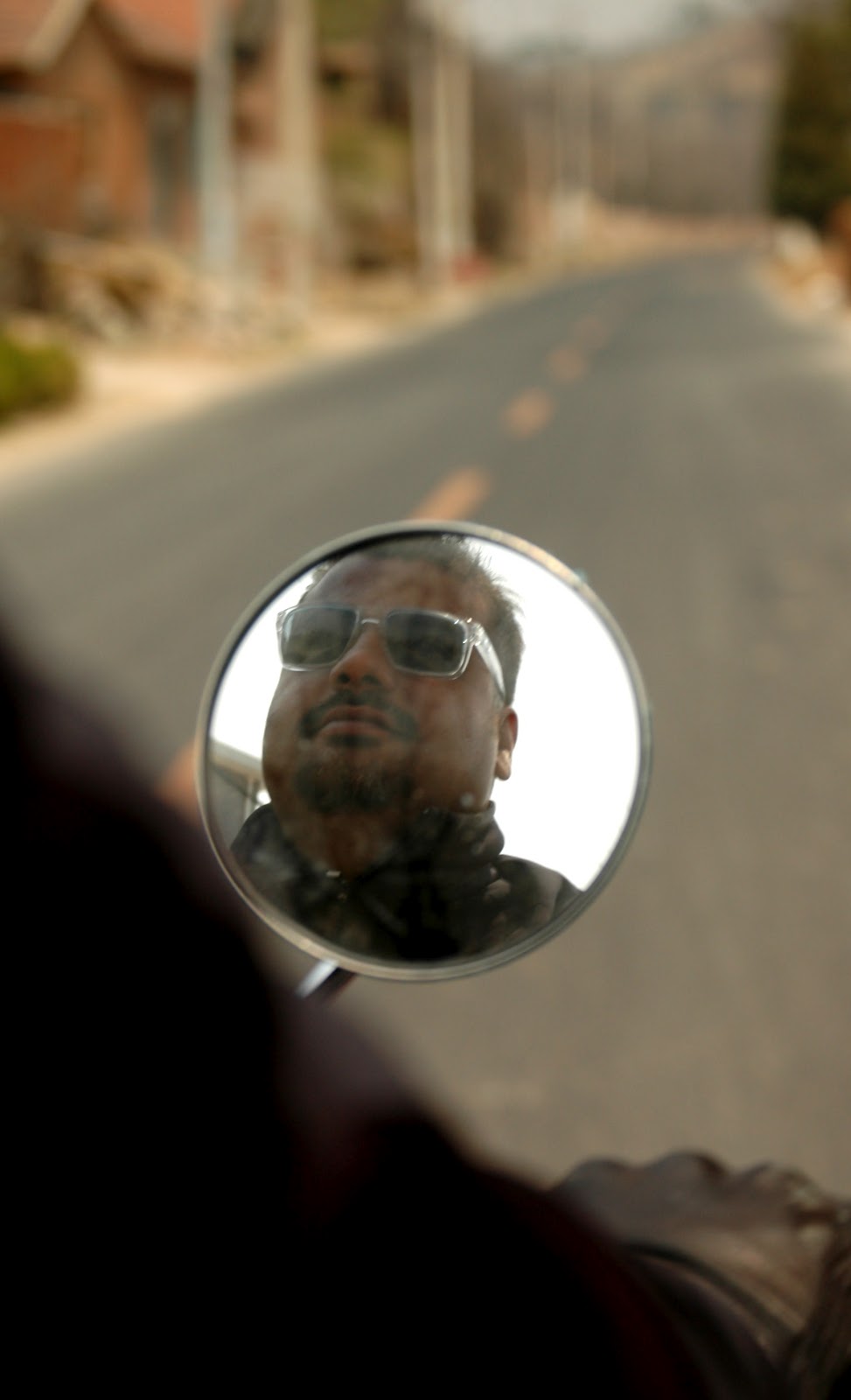
We awoke that morning, grabbed a quick dumpling breakfast, and not long after were greeted at the entrance of our hutong by Giordano (my wonderful driver for the day), Samantha (the lovely girlfriend of Ezra), and a local Chinese kid with spiky dark hair, a black leather Harley Davidson jacket and a cellphone that had a plastic teddy bear cover on it (Aman’s driver for the day).  Aman’s driver smiled a lot but he did not speak English, so Samantha had agreed to come along and ride as a passenger on Aman’s driver’s bike.  Everyone was super friendly, and it was immediately clear that we were going to have an awesome day.  After quick introductions, Aman and I jumped into our respective sidecars, which were surprisingly comfortable.  We barreled down the gray alley outside our hutong, with nothing but the deafeningly awesome engine sound of a Chang Jiang motorcycle in our ears.  Heads turned as we noisily made our way out of Beijing and we were soon on the highways. 


We made a couple of stops along the way – to see some sights (i.e., the Silver Pagodas), to chat with each other, and to give the motorcycle engines the occasional rest.  It was super relaxing. 


At one point, Aman’s driver let Aman drive the motorcycle.  He did so like a pro, of course.


Of course, the real highlight of the day was actually seeing the Great Wall.  Giordano and Samantha brought us to a very remote, non-touristy spot where we had great views of original and restored sections of the wall.  (The original parts were built during the Ming dynasty in the 16th century.)  When we reached the wall, we took a right and started walking up in a side-to-side diagonal fashion, much the same as a road makes hairpin turns along a steep mountain.  This particular section of the wall rises and falls sharply so, at times, it was a difficult climb.  We took breaks as needed, which conveniently allowed us to marvel at the spectacular views.


Samantha and Giordano ran ahead at one point to set up our lunch, which Samantha had prepared and packed for the day.  Aman and I hung back, letting the experience soak in.  When we met up with our guides again, three watchtowers later, we found quite an impressive picnic spread of roast chicken, homemade focaccia bread, a pizza covered in vine-ripened tomatoes, a carving board full of cheese and sliced meats, bowtie pasta salad with fresh basil and cherry tomatoes, fresh papaya, espresso (to be made in old school Italian espresso maker) and, most importantly, a bottle of fine Italian red wine.  We could barely believe our eyes…  the food, the wine, the view…  unbelievable!


After lunch, we continued along the wall to the next exit / entry point.  This particular section of the wall is so off-the-beaten-path that we hardly saw another person all day.  In all, we walked a four-kilometer stretch of the wall that day before jumping back into our sidecars and making our way back to Beijing.  Driving in China is not the same as driving in Vietnam (i.e., more gray factory towns, less scenic beauty) but it was still a pretty amazing day as we watched the sun falling behind the northern mountains of Beijing in the late afternoon.  

That night, exhausted, but in a good way, we laid low.  It was our last night after an amazing five days in Beijing.  At times, it was tiring - both physically (from the walking) and mentally (from the inability to communicate and ease of getting lost).  But it was also very rewarding.  Beijing has a tremendous past, a glimpse of which definitely comes across when you are touring the ancient sights.  But there is also a very modern feel to the city, which combines with the past to create a truly unique culture.

On our final afternoon, we had plans of meeting up to have a drink with Ezra and Samantha, since we had enjoyed our previous afternoon with Samantha so much and, also, didn't want to miss a chance to meet Ezra, who we had heard a lot about the day before.  (He was out of town on business that day; Aman and I were the first group to visit the Great Wall without him since he started running these sidecar tours.)  We met them at Cafe Sambal, a rustic looking Malaysian restaurant located in an old hutong, where we relaxed for an hour or two talking about travel, living abroad and China, among other things.  Ezra and Aman bonded immediately over a shared love for Royal Enfield motorcycles, which Aman grew up riding in India and Ezra uses for motorcycle tours that he runs in India.  Very interesting couple, and very enjoyable to meet them.  It was a good ending to our time in Beijing... that and, of course, the experience of leaving Beijing that night via train station.  What a place!!